Selecting the best aerial apparatus for a fire department's fleet is a complex process involving numerous decisions and comparisons. But more often than not, the first significant milestone is choosing between a rear-mount aerial and a mid-mount aerial.
This blog article will break down the pros and cons of rear-mount aerials to help fire departments make an informed, operationally sound decision.
What Is a Rear-Mount Aerial?
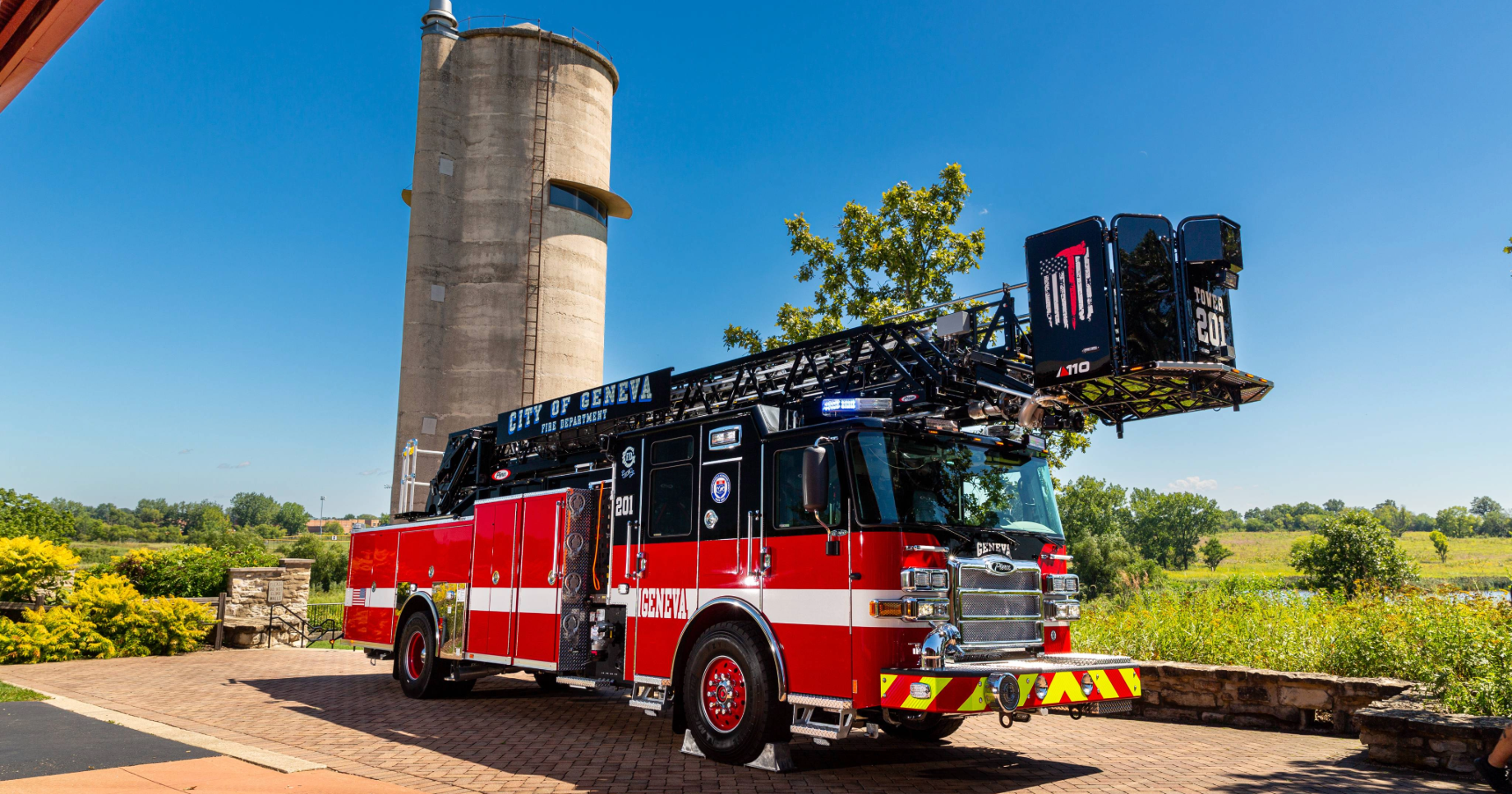
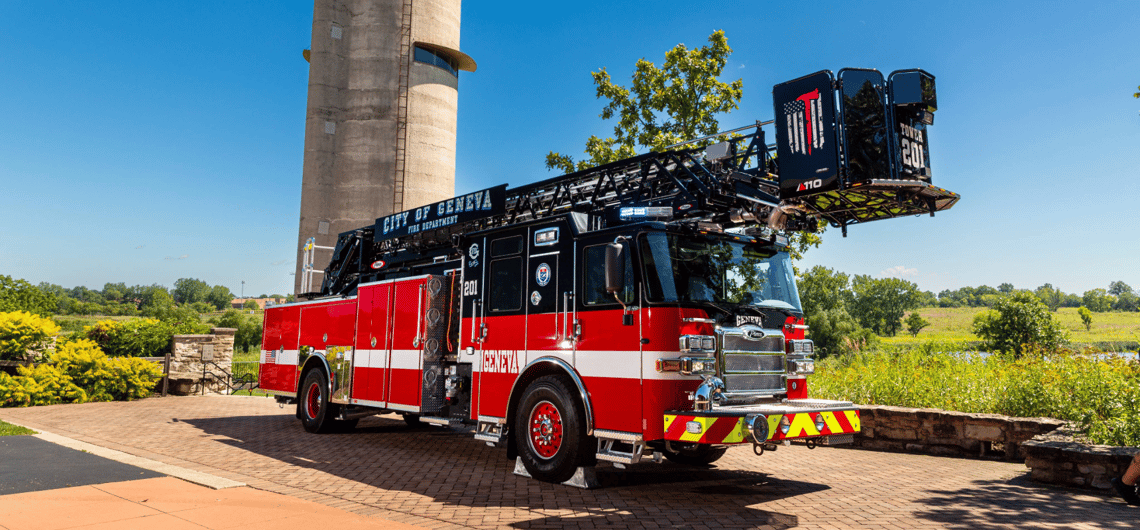
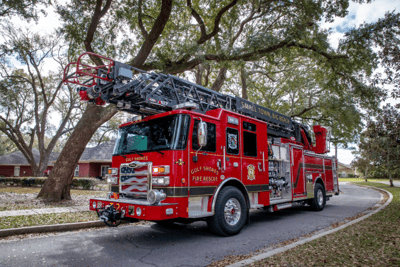
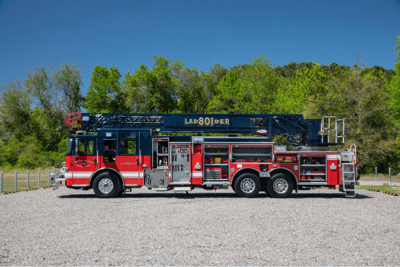
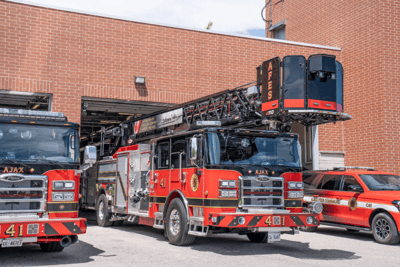
A rear mount aerial, sometimes called an ‘over-the-cab' ladder or platform fire truck, is an aerial appar atus where the boom extends forward over the vehicle cab . The design of a rear-mount aerial requires additional height to clear the cab, which increases the truck's overall height profile.
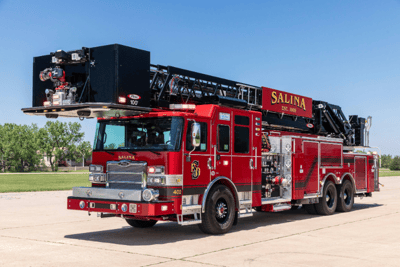
This differs from mid-mount aerials, where the boom is mounted directly behind the cab and faces toward the rear of the truck. This allows for a lower overall profile.
Pros of Rear-Mount Aerials
There are several attributes of rear-mount aerials which fire departments praise as key reasons why this type of fire truck is preferred over mid-mount aerial apparatus.
Simplified Aerial Device Structure
Rear-mount aerials typically have three or four ladder telescoping sections, whereas mid-mount aerials typically have five. Each section of overlap is required to have clearances to allow for smooth operation. With only three or four sections, rear-mount aerials have fewer clearances to account for and therefore, fewer moving parts.
Fewer sections means:
- Less movement or flex during operations.
- Simpler maintenance due to fewer retraction system components, like sheaves, slide pads and pins.
- Reduced wear-and-tear over time.
More Compartmentation Available
The design of a rear-mount aerial places the aerial device higher on the chassis. As a result of this placement, there is more room for compartments, hose, ground ladders and a larger water tank.
This added compartmentation space is an advantage for departments which require more tools, equipment and storage space.
Narrower Aerial Device
The reduced number of telescoping sections results in a narrower nested device. This can help increase storage on top of the apparatus body on the catwalks for hatch compartments, cord reels and lighting.
Reduced Tail Swing
Traditional mid-mount aerials are known for long tail swings due to the large rear overhang. In contrast, rear-mount aerials have a more compact rear body, reducing tail swing and making them easier to position in certain environments.
However, it is important t o note the Pierce Ascendant® 100' Heavy-Duty Mid-Mount Aerial Tower off ers an overall length of only 41' 5", with the rear overhang of a rear-mount designed to minimize tail-swing.
Cons of Rear-Mount Aerials
While there are several key advantages to rear-mount aerials, there are several points to consider which may influence your decision to choose this type of apparatus.
Higher Overall Vehicle Height
Rear-mount aerials must extend over the cab, which increases the overall height of the truck. This can be problematic in communities with:
- Low bridges
- Tight apparatus bays
- Height restrictions at station doors
Potential for Reduced Driver Visibility and Maneuverability
The forward-facing bucket on a rear-mount aerial can obstruct a driver's view of traffic signals, street signs or overhead hazards. In some instances, it may also reflect lights into the driver's eyes during night driving.
Moreover, because the bucket can extend as much as 4' in front of the truck, a rear-mount aerial can make it challenging to negotiate around light poles, power poles, car ports and street signs.
Greater Setbacks
Due to the longer, three-or-four section aerial device design, rear-mount aerials require a greater setback for operations at low angles.
When fireground operations rotate off the side of the apparatus, the rear-mount design results in greater operational setbacks, particularly while performing low‑angle or "storefront blitz" operations.
Interested in comparing a rear-mount to a mid-mount? Check out the interactive comparison tool here.
Department Fit: When Is a Rear-Mount Aerial Right for You?
A rear-mount aerial brings many attributes to fire stations across the nation. This configuration is well-suited for departments which:
- Need additional storage space on the apparatus.
- Value simplified maintenance and fewer moving parts.
- Prioritize vertical reach.
- Don't face height limitations at the station or within their jurisdiction.
- Have ample space on-scene for setback and maneuverability.
As departments consider the best type of aerial configuration for their fleet, it's essential to weigh mission-critical needs, physical restrictions and operator preferences.
Rear-mount aerials remain a reliable choice for many fire departments, especially those who prioritize height, compartmentation and mechanical simplicity.
Do you have questions about rear-mount aerial apparatu s? Reach out to your local dealer or l et us know in the comments.
What is your favorite feature of your department's rear-mount aerial apparatus?