
Trucks / Oshkosh Airport Products
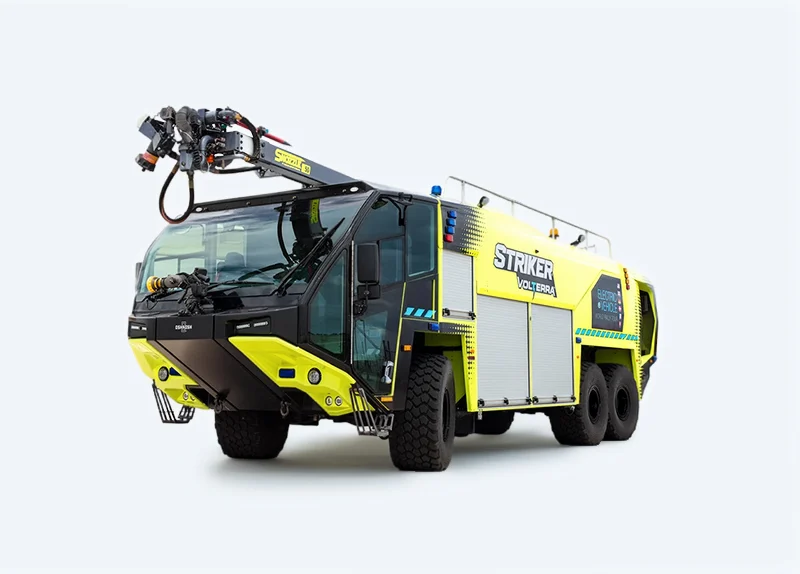
Striker Volterra ARFF
The Striker Volterra moves the ARFF conversation into hybrid-electric territory. Oshkosh positions it around quieter operation, reduced emissions, fast acceleration, lower maintenance exposure, and a more flexible charge-and-deploy operating model.
Why This Truck Exists
Volterra is for airports that want to modernize the ARFF fleet without giving up frontline capability. Oshkosh frames it around sustainability, reduced noise, improved maneuverability, and faster response feel through instant torque and low-speed electric drive.
This is not just an emissions story. It is also a maintenance and lifecycle story. Fewer moving parts, fewer mechanical wear points, and reduced downtime all matter when the airport wants cleaner operation and better availability from the same truck program.
Volterra Focus Areas
| Drive Strategy | Hybrid-electric and electric ARFF direction |
|---|---|
| Performance Message | Instant torque, faster acceleration, and flexible charge / deploy / charge use |
| Sustainability Direction | Reduced emissions and reduced noise |
| Maintenance Direction | Fewer moving parts, reduced maintenance, reduced downtime |
| Vehicle Control | Standard rear axle steering and improved maneuverability |
| Crew Environment | More cab space and updated safety technology |
Airport Fit
Volterra belongs in the conversation when airport leadership is looking at emissions, fuel use, and noise as operational requirements rather than marketing preferences.
Performance Read
Instant torque and low-speed electric drive point to a truck that should feel quick and controlled at the exact moments ARFF operators care about most: launch, approach, positioning, and repositioning.
Lifecycle Read
Reduced maintenance and fewer wear points are meaningful if the airport is trying to lower downtime, simplify support planning, and bring sustainability goals into the procurement case with real operational justification.
Why Volterra Changes the Conversation
Built for flexibility
Oshkosh frames Volterra around a charge-and-deploy cycle, which matters because airports do not all operate on the same staffing, standby, or peak-traffic pattern. The truck needs to fit the operation, not the other way around.
Updated safety and maneuverability
Rear axle steering, added cab room, and updated safety technology point to a platform that is trying to improve both crew confidence and operator workload, not just powertrain efficiency.
Next Step
If the airport wants ARFF capability that supports sustainability goals without turning the fleet into an experiment, Volterra is the page worth studying first.